Friday, November 06, 2015

Double Standards

In order to establish a double-standard effectively, you need to create a series of narratives (as opposed to one single narrative) so that it masks the hypocrisy...

God's Not Dead 1 Atheist professor preaches to Christian student, student must stand up for his right to believe.


God's Not Dead 2  is simply the inverse: Christian teacher preaches to Atheist student, teacher must fight for her right to teach the Bible.


This is Tribalism 101; Us vs. Them.

The diabolical antagonists in these movies are caricatured straw men, and need to be because these movies' agenda is so misguided and sad, one dimensional disney characters are all that can support it.

These movies are born out of and perpetuate moral outrage. Which is a shame, because moral outrage is a thin veil for self-righteousness and fear.

Thursday, September 24, 2015

ELI5: How Do We Know That the Bible is Real?

I recently received this question from a young person, and quickly came to the realization that possibly the most difficult thing for me to do is articulate massive concepts in simple language. Even adults have a hard time understanding me sometimes, and this is something I am working on changing. I very much appreciate the opportunity to introduce a new series I will be calling "Explain Like I'm Five" or in reddit lingo, "ELI5". These will be real theology questions from people who will remain unnamed, but I want to share these and encourage anyone to ask me questions for this series, especially on behalf of young people. If you have a question you would like to see answered in this format, please leave an anonymous comment here.

"My question is how do we know that the bible is real and not just a book that a couple of guys put together?"


In a very real sense, it is a collection of books that a bunch of guys put together. What we believe about the Bible is that it was written by people who were inspired by God and faithfully recorded what they believed about God.

The people that wrote the Old Testament were called the "Hebrews" and they wrote about other cultures of their time. Even cultures we knew nothing about until 200 years ago! These civilizations were entirely forgotten, but the Hebrews were not forgotten. Because this "Testament" was preserved, the knowledge of the Hebrew people survived even though their homeland was destroyed and their leaders were banished. One thing we learned after discovering these forgotten civilizations is that many of the Bible's stories turned out to be "borrowed" from other civilizations and rejiggered to make radical new points about the nature of our God.

The Bible is a record of many things that can be hard to understand, and Jesus offered a fresh, new way to read scripture that convicted the leaders of his day and ultimately led to his crucifixion. By practicing what Jesus said, we allow God to transform us from the inside out. How do we know it is inspired by God? We don't know for certain, but as Christians, we trust Jesus. I read the Bible to learn what people believed about Jesus, but I trust Jesus because I have been transformed by the words of Jesus and have seen others transformed by them. Millions around the world have been transformed by them too.

The Good Muslim

But he, desiring to justify himself, said to Jesus, “And who is my neighbour?”

Jesus replied, “A man was going down from Jerusalem to Gaza, and he fell among terrorists, who stripped him and beat him and departed, leaving him half dead.

Now by chance a Christian was going down that road, and when he saw him he passed by on the other side. So likewise a Jew, when he came to the place and saw him, passed by on the other side.

But a Muslim, as he journeyed, came to where he was, and when he saw him, he had compassion. He went to him and bound up his wounds, pouring on antiseptic. Then he put him in his car and brought him to a hospital and took care of him. And the next day he took out two hundred dollars and gave it to the medic, saying, ‘Take care of him, and whatever more you spend, I will repay you when I come back.’

Which of these three, do you think, proved to be a neighbour to the man who fell into the hands of terrorists?” He said, “The one who showed him mercy.” And Jesus said to him, “You go, and do likewise.”


Thursday, July 02, 2015

RE: 40 Questions for Christians Now Waving Rainbow Flags

Kevin DeYoung of TGC asked 40 questions for Christians who support gay marriage, and I believe they are questions worth answering. So here we go.


1. How long have you believed that gay marriage is something to be celebrated?

For about 2 years now. I've been on the fence for a while, but I have found answers to my own questions through prayerful meditation and seeking wise counsel. I now believe the more difficult questions are for Christians who oppose gay marriage.


2. What Bible verses led you to change your mind?
Galatians 3, and a re-reading of Romans 1-2. Of course, I'm vehemently opposed to lay reading scripture in isolation.


3. How would you make a positive case from Scripture that sexual activity between two persons of the same sex is a blessing to be celebrated?
I honestly wouldn't expect the Bible to address a concept like sexual orientation (not known in antiquity) at all. To go looking for it is a misuse of Scripture. I can, however, use Torah to make a biblical case for obtaining women as property and celebrating bloodline inheritance. When St. Basil of Caesarea wrote against polygamy in the 4th century, he appealed to Church tradition; not to the canons. Only Roman citizens were culturally monogamous then, so it could be just as easily argued that Christians in leadership conformed to the pattern of Rome to avoid condemnation. Take that as you will.


4. What verses would you use to show that a marriage between two persons of the same sex can adequately depict Christ and the church?
I believe the depiction of marriage between man and woman united with God is sufficient for the revelation of the mystery of salvation. It is, after all, allegory for something beyond anyone's comprehension. To require everyone to experience that simply to understand it does a disservice to the celibate, or anyone in a marriage with a sexual (physical) dysfunction.


5. Do you think Jesus would have been okay with homosexual behavior between consenting adults in a committed relationship?
As long as that committed relationship was blessed by the Church. Yes, it is up to the Church, according to Matthew 16.


6. If so, why did he reassert the Genesis definition of marriage as being one man and one woman?
Neither Jesus nor Jewish men understood this passage as a prohibition on polygamy. In the context of divorce, this also includes a polygamous marriage, acceptable according to Genesis 4:19.


7. When Jesus spoke against porneia what sins do you think he was forbidding?
Being an idolatrous whore.


8. If some homosexual behavior is acceptable, how do you understand the sinful “exchange” Paul highlights in Romans 1?
The people Paul is talking about had knowledge of God but rejected God in spite of their knowledge of Him. They made idols shaped like men and women, birds, four footed beasts and snakes or insects and then worshipped those idols instead of worshipping God[1].


9. Do you believe that passages like 1 Corinthians 6:9 and Revelation 21:8 teach that sexual immorality can keep you out of heaven?

Yes. But, also like it says in Revelation 5, everyone will worship God in heaven.


10. What sexual sins do you think they were referring to?

Shrine prostitution in Corinth, and whore-mongering.


11. As you think about the long history of the church and the near universal disapproval of same-sex sexual activity, what do you think you understand about the Bible that Augustine, Aquinas, Calvin, and Luther failed to grasp?

...Wondering why this is isolated to Western-rite Catholicism and subsequent Reformers? I think it's fairly easy to see they got a lot of other things measurably wrong as well. Using Jesus' table-throwing as justification for Just-War theory, for example. History repeats itself, we can either learn from, or ignore the faults of our predecessors.


12. What arguments would you use to explain to Christians in Africa, Asia, and South America that their understanding of homosexuality is biblically incorrect and your new understanding of homosexuality is not culturally conditioned?

In Canada, where I live, multiculturalism is the norm. So I might talk about progressive revelation and country development and history. Christians in Africa are still dealing with culturally accepted polygamy (as building an empire).


13. Do you think Hillary Clinton and Barack Obama were motivated by personal animus and bigotry when they, for almost all of their lives, defined marriage as a covenant relationship between one man and one woman?

I couldn't care less, but nobody can speculate on that.


14. Do you think children do best with a mother and a father?

I think male and female influences are needed. Whether those influences are in a marriage together, I'm not convinced it is necessary. The best family unit should include multiple generations, in my opinion, and should not be restricted to bloodlines. Jesus redefined family to be anyone who does the will of our Heavenly Father, ultimately (Matthew 12:46-50).


15. If not, what research would you point to in support of that conclusion?

Jesus.


16. If yes, does the church or the state have any role to play in promoting or privileging the arrangement that puts children with a mom and a dad?

The Church's role here is to mother the motherless and father the fatherless.


17. Does the end and purpose of marriage point to something more than an adult’s emotional and sexual fulfillment?

I don't know any married couple that would reduce the purpose of their marriage to this.


18. How would you define marriage?

As a Christian, I define my marriage as two of us joined together with God, unseparated by mankind. But I also recognize non-Christian marriages that have various cultural definitions, and don't fit my experience.


19. Do you think close family members should be allowed to get married?

As universal taboos go, incest avoidance mechanisms exist in creatures ranging from cockroaches to chimpanzees[1]. I think it makes sense as a universal law, for biological reasons.


20. Should marriage be limited to only two people?

I have yet to hear a compelling case for functional plural marriages, but I accept that I only find it taboo for cultural reasons.


21. On what basis, if any, would you prevent consenting adults of any relation and of any number from getting married?

Biological, psychological, spiritual, sociological, and anthropological basis.


22. Should there be an age requirement in this country for obtaining a marriage license?

If the requirement is based on brain development, then yes.


23. Does equality entail that anyone wanting to be married should be able to have any meaningful relationship defined as marriage?

No.


24. If not, why not?

Not everyone is an adult.


25. Should your brothers and sisters in Christ who disagree with homosexual practice be allowed to exercise their religious beliefs without fear of punishment, retribution, or coercion?

Yes. But religious freedom cannot infringe on others' freedoms. You can disagree with someone and still support their human rights, which includes LGBT marriage.


26. Will you speak up for your fellow Christians when their jobs, their accreditation, their reputation, and their freedoms are threatened because of this issue?

Yes, but not when they lose their job for discrimination. You are entitled to your interpretation of scripture, but that's all it is -- your interpretation. I would like to see more Christians acknowledge their own hermeneutics.


27. Will you speak out against shaming and bullying of all kinds, whether against gays and lesbians or against Evangelicals and Catholics?

Yes, and I do. As well as against shaming and bullying LGBT Evangelicals/Catholics.


28. Since the evangelical church has often failed to take unbiblical divorces and other sexual sins seriously, what steps will you take to ensure that gay marriages are healthy and accord with Scriptural principles?

Engaging in dialogue and mentoring if requested, recommending the Alpha Marriage program or similar.


29. Should gay couples in open relationships be subject to church discipline?

It depends on the church.


30. Is it a sin for LGBT persons to engage in sexual activity outside of marriage?

Yes.


31. What will open and affirming churches do to speak prophetically against divorce, fornication, pornography, and adultery wherever they are found?

Better research, hopefully. What are the non affirming churches doing about these problems in the meantime?


32. If “love wins,” how would you define love?

Love is patient, love is kind. It does not envy, it does not boast, it is not proud. It does not dishonour others, it is not self-seeking, it is not easily angered, it keeps no record of wrongs. Love does not delight in evil but rejoices with the truth. It always protects, always trusts, always hopes, always perseveres. Love never fails.


33. What verses would you use to establish that definition?

1 Corinthians 13.


34. How should obedience to God’s commands shape our understanding of love?

The inverse is true: Our understanding of love shapes our obedience to God (Matthew 22:37–40).


35. Do you believe it is possible to love someone and disagree with important decisions they make?

Yes.


36. If supporting gay marriage is a change for you, has anything else changed in your understanding of faith?

My understanding of Salvation, creation, eschatology, and hell.


37. As an evangelical, how has your support for gay marriage helped you become more passionate about traditional evangelical distinctives like a focus on being born again, the substitutionary sacrifice of Christ on the cross, the total trustworthiness of the Bible, and the urgent need to evangelize the lost?

I've stopped calling myself evangelical or giving in to Christian tribalism, and my language is far more inclusive. Christ's sacrifice was not always thought to be substitutionary; that's just Anselm's atonement theory. Most evangelicals have no idea what "born again" meant to a first century Jew. The Bible is not as trustworthy as Jesus is. And the only urgent thing is the need to slow down.


38. What open and affirming churches would you point to where people are being converted to orthodox Christianity, sinners are being warned of judgment and called to repentance, and missionaries are being sent out to plant churches among unreached peoples?

No such church is necessary. I'm satisfied serving in the broken, imperfect churches around me.


39. Do you hope to be more committed to the church, more committed to Christ, and more committed to the Scriptures in the years ahead?

Yes.


40. When Paul at the end of Romans 1 rebukes “those who practice such things” and those who “give approval to those who practice them,” what sins do you think he has in mind?


Molech worshippers at a pagan shrine, according to Aristides.

Monday, June 23, 2014

Answering Answers in Genesis

I came across this article on reddit and responded there so I decided to share my thoughts here as well. I don't spend much time here responding to blogs, as I like to reserve this space for deep reflection. Once in a while, I rant about closed-minded thinking, but I think critiquing actual arguments helps make that more interesting.

Tim Chaffey, Answers in Genesis (AiG), responds to a reader who believes that the Bible should not be "interpreted literally" and that we should just focus on the message of salvation.

Here is my response to Tim Chaffey:
Tim Chaffey: Title: Tim Chaffey, AiG–U.S., responds to a reader, who believes that the Bible should not be interpreted literally and that we should just focus on the message of salvation.
I do wonder if the reader would affirm this title. I somehow doubt s/he would, since "focusing on the message of salvation" means a decidedly deeper treatment of the Bible, rather than just a nonliteral approach to the whole thing. S/he clearly believes the story of Jesus is literal.
Tim Chaffey: however, being “open to other religious thought” is directly opposed to clear teachings in God’s Word.
This is mind-numbingly stupid. One can affirm all the cited verses and still be open to other religious thought.
Tim Chaffey: Why do you say no one can claim to know the true nature of God and how the earth was created?
Because nobody is capable of knowing the mind of God or how the earth was created. God told Moses he couldn't see God and live. What does that tell us about His true nature?
Tim Chaffey: In Genesis 1 and Exodus 20:11, the Lord told us that He made everything in six days. Why would you reject God’s revelation of Himself and the truth in His Word?
Exodus tells us the proper exegesis of the Genesis 1 story: to tell humans they ought to observe a Sabbath day. To reject this is to not keep the Sabbath. The same way rejecting Jesus' parables means to reject an underlying principle.
Tim Chaffey: You are certainly entitled to your beliefs, but if this is merely your opinion, then your claims are simply arbitrary. Do you have any rational reason for claiming these things?
If I were to hazard a guess, the reader is comparing AiG to the taliban because they are brainwashing children to oppose science education using a dogmatic hermeneutic to interpret scripture. AiG can pretend their interpretation is the only valid one, but ignoring the comparison is just a dodge.
Tim Chaffey: Not only is your argument a non-sequitir (i.e., supporting the Amish way of life does not follow from our acceptance of the biblical account of creation), it shows that you do not recognize the stark difference between historical (origins) science and operational (observational) science.
Historical vs operational science is an imaginary distinction dreamt up by AiG. There is no line so neatly drawn between the two. Maybe a proper understanding of scientific terminology would help AiG make their case that YEC falls into the realm of historical science, but this remains to be seen.
Tim Chaffey: The big difference is that evolutionists have no eyewitness testimony to help them interpret the circumstantial evidence, whereas creationists do: we have an accurate record (the Bible) from God—the infallible eyewitness of creation and all history.
It's nice to finally read AiG's real explanation of this harebrained idea. The Bible is not an eyewitness to creation, nor does it ever claim to be. God did not write the Bible, He inspired man to write it. And it wasn't written until hundreds of years after AiG says it happened. At least evolutionists look at fossil formations and recognize development patterns and find corroborative evidence.
Tim Chaffey: A few minutes of searching our website would reveal that Answers in Genesis employs several PhD scientists, and many of our employees hold advanced degrees in various disciplines of science, theology, history, etc.
Am I right in thinking Tim just vaguely referenced the AiG website to support the claim that their employees are well educated? This is a poor response to a question that deserves an answer.
Tim Chaffey: But our desire at AiG is to stay within the “box” of Scripture. Why would we ever want to think anything contrary to what the all-knowing, all-powerful God has revealed?
It would be nice if this was actually true. But AiG has airbrushed out the prevalent ancient cosmology model described throughout scripture. Unless they concede that the Bible's view of the universe looks more like a snowglobe sitting on pillars, they aren't reading it "literally". If AiG wants to admit they pick and choose what to take literally after that, then we can talk about who takes reasonable assumptions further. The problem for me isn't that YEC can't be a valid interpretation of scripture, it's that YEC must be decidedly inconsistent in order to make sense of the natural world. I don't understand what problem this solves for anyone in the 21st century.
Tim Chaffey: Have you ever thought outside the box of evolution and millions of years that you (like we) have been taught to believe all your life in school, museums, science programs on TV, and so on?
Yes. The problem is when we choose stubborn rhetoric over scientific inquiry.
Tim Chaffey: Furthermore, the biblical teaching that simply by His spoken word (Genesis 1, Psalm 33:6–9) God created “the heavens and the earth, the sea, and all that is in them” in six days (Exodus 20:11) shows a vastly more powerful, intelligent, loving, and just God than one who needs to use billions of years’ worth of death, suffering, disease, bloodshed, and extinction to create.
And this is why I believe the YEC argument is purely theodical and not scientific. And this isn't even good theology.
Tim Chaffey: Why would God, for example, create the sun, moon, and stars so that man could measure days, seasons, and years (Genesis 1:14), and then wait billions of years before creating man, the first physical being who could tell time?
Because God is infinitely patient.
Tim Chaffey: And why would He create plants millions of years before man, birds, and most land animals, when plants were made to be a source of food for man, birds, and the other animals (Genesis 1:29–30)?
Oil comes to mind... But seriously, this is no more questioning God than what we see in Job.
Tim Chaffey: And why would He create billions of creatures to live and die and even become extinct millions of years before He created man to rule over them?
Why would He create billions of stars billions of lightyears away in order to fill our sky at night? Anthropocentrism much? We could ask these same questions of the stories we see in Genesis anyway. Why flood the earth so soon after creating mankind, for example?
Tim Chaffey: A god who would use evolution and millions of years to create would be weak and wicked, not the God of the Bible. And such a god would not be worthy of worship, especially if that same god lied about how long it took him to create everything (i.e., saying that everything was made in six days when it really was billions of years).
This simply requires an explanation. Why would that God be more wicked, weak, unworthy of worship, or a liar? Why should we believe Genesis is written in step logic rather than block logic? Why should we believe Adam was a person who could comprehend anything beyond what was instructional for him on a weekly basis? Like Sabbath rest?
Tim Chaffey: Actually, the Bible can be interpreted literally. The real question is, should the Bible be interpreted literally? And the correct answer is that each passage should be interpreted according to the standard principles of interpretation for that particular type of literature.
Yes... but the genre of Genesis 1-7 is not exactly "historical narrative" but origin myth. Nobody in the ancient world thought about historicity in their writing. It's pretty evident early Hebrews didn't either.
Tim Chaffey: Again, you are exhibiting cultural and chronological snobbery. So the people to whom the Bible was originally written existed before there were any discoveries and technological advances? Hardly...
...Are we still talking about "historical" science, AiG?
Tim Chaffey: Your comment was not only a put-down to intelligent people who lived long ago, but it was actually an attack on the perspicuity (clarity) of Scripture and the intelligence or integrity of God, who created man and gave him the mandate to study, manage, and rule over the rest of creation (Genesis 1:26–28).
Except the Bible isn't clear on these matters, and does not intend to be. That says nothing about God's intelligence or integrity, only that He cares enough to tell the first humans in simple language that they have a place in the world and how to operate within it.
Tim Chaffey: What we reject are the atheistic assumptions used to imagine the method and timetable of creation. The millions of years of evolution are not a discovery but an invention in the minds of Darwin and many others who attempt to use science to justify their denial of the God who made them.
Here we go. Conflating atheism with methodological naturalism once again. Well done.
Tim Chaffey: As someone who proclaims belief in God, you have no excuse for rejecting the truths He has clearly revealed in His Word about the “method and timetable of creation.”
Concern trolling. All the reader is doing is rejecting AiG's assumptions used to imagine the method and timetable of creation. The 6 days of creation are not a discovery but a poorly illiterate invention in the minds of AiG and many others who attempt to use science to prove God (to use your words inversely).
Tim Chaffey: Since God has always existed, knows everything, and has told us what He did, we will trust His Word any day over the ever-changing opinions of man.
Well someone should have told Job that what God did was so clear since the dawn of man. Oh, wait, God told Job that he could not comprehend it.
Tim Chaffey: Perhaps you could tell us why 2 Peter 3:8—a passage originally written in Greek in the context of discussing the attitude of scoffers leading up to the Second Coming of Christ—should be used to reinterpret the historical narrative of Genesis 1—a passage originally written in Hebrew explaining what God did during the Creation Week. This is not a responsible way to interpret the Bible.
Does 2 Peter 3 not tell us something about the true nature of God? Or were you using selective data to support your premise?
Tim Chaffey: Even if it was legitimate, what would it prove?
That hyperbolic language is one way the Bible talks about God and creation.
Tim Chaffey: It’s not complicated at all. But it is foolish and arrogant to reject God’s Word and twist its meaning to fit what sinful man thinks about origins.
Yet God trusted sinful man to write the Bible and interpret it, and develop other modes of inquiry such as the scientific method.
Tim Chaffey: The Bible also teaches that He was born of a virgin. Yet modern scientific consensus is against virgin births, resurrections from the dead, and miracles altogether. Why do you still believe these things despite what the majority of scientists believe?
Because the virgin birth is presented as an extraordinary event and fully acknowledged as such. There is reason to consider miracles. But we have insurmountable evidence that the earth is very old, and that the universe has existed long beforehand. If we had insurmountable evidence that Jesus was not born of a virgin, then we would have to reexamine that. No big deal.
Tim Chaffey: Why do you arbitrarily choose which portions of Scripture you want to believe and which sections to reject?
Who is rejecting any portion of scripture? Why do you reject the ancient cosmological model? Why do you believe this is the primary message of Genesis? Couldn't it be perfectly acceptable to believe that Genesis 1-7 was counter-polemic to surrounding polytheistic origin myths? Why does this more popular approach diminish God's word?
Tim Chaffey: Then why did God include these details in His Word? If God merely wanted us to know that He is the Creator and that He made us in His image, then He could have simply given us Genesis 1:1 and 1:26–27.
A better question might be, why did man write these details? Couldn't it be more about the theology of rejecting Sun worship and introducing monotheistic concepts within a palatable and relatable worldview?
Tim Chaffey: If Adam was not a literal, historical person who literally rebelled against God by eating a literal fruit, thus bringing in the Curse upon this world, then why did Jesus (a descendant of the literal Adam) come to die on the Cross?
Because the name Adam means "Man" and as such he is a proto-archetype of mankind. We all sin like Adam, we all eat forbidden fruit, and we all bring the curse upon this world. If you can't see Christ as a messiah representing and redeeming all mankind, then I have to question your understanding of Christianity.
Tim Chaffey: If we say the account in Genesis 1–11 is not true, then that opens the door for others to deny the rest of Scripture.
Of course, the word "true" does not necessarily mean "literal". We believe Jesus' parables were all true, but not literal. This also dismisses ancient writing styles by suggesting they meant to say something literal or historical.
Tim Chaffey: If this is what God has called us to do, then how could it possibly be a waste of time and effort?
I wonder what you think about the people working at Biologos. Are they doing what God has called them to do? Are their time and efforts being wasted?
Tim Chaffey: Furthermore, based on many of the positive comments we receive, we know this ministry has long been a blessing to Christians, and God has even used us on many occasions to lead people to salvation that can only be found in Jesus Christ.
And a curse for so many others, and countless led astray. Too many to be sure.
Tim Chaffey: Our primary desire is not to see people become young-earth creationists.
Then you shouldn't question the salvation of those who disagree with you on this issue. Yet you do so in the next sentence.
Tim Chaffey: God does not resort to multiple logical fallacies when correcting and rebuking people. Nor did He ever insist that people reject the plain meaning of His Word.
I've counted many fallacies in this very response, and a plain reading of scripture is often confused for ignoring presuppositional biases and ignoring context or respect for ancient audiences.
Tim Chaffey: I hope you will consider what I have written and make the commitment to trust God’s infallible and inerrant Word over the ever-changing fallible ideas of men.
Thanks but I'll stick to acknowledging all of what it tells me and just following Jesus. Not airbrushing out what I know is erroneous and pretending Christ's truth is at stake.

Friday, April 11, 2014

Noah: A Christian Filmmaker Review

I saw the Noah movie recently, and I was thoroughly impressed. Both as a Christian and as a filmmaker.

I believe in storytelling. Stories are an immensely powerful contribution to the cosmos; in fact a solely human one. I believe narrative is more valuable than facts when it comes to retelling history, and I don't see this as a negative thing at all. We humans are very intelligent. We have the capacity to extract symbols, lessons, and patterns from our history and this separates us from any other created being we're aware of.

Noah is a perfect picture of this. Ancient Mesopotamian flood stories concern the epics of Ziusudra, Gilgamesh, and Atrahasis. Yet Moses retells these polytheistic tales as an amalgamated monomyth.

With regards to the Bible and Noah's story in particular, adaptation to film is a daunting and laudable task. We need to recognize this first and foremost. We have four short chapters in Genesis from which to draw from unless we visit extra-biblical texts, so thank God they did just that. The rabbinic literature gives us a fully fleshed character of Noah, tells us what the land was like, and paints a cinematic backdrop picture of despair. From this we can see the protagonist too troubled by doom to provide wives for his children. Our hero in this epic is about as equally stupid as he is wise.

What we also get from the rabbinic literature is a sense that Noah had the power to change God's mind all along. This is certainly a question we all ask about Noah's faithfulness, whether his faith was virtuous or lacking. This causes us to question whether God was wiping the creation slate clean of corrupted humanity, or if all this was done in vain due to Noah's obstinance.

What a proper movie about Noah needs to remind us of is that Genesis is a Jewish text. We typically forget this by interpreting and then translating while ethnocentrically cleansing ancient Jewish narratives. Christianity has neutered the world in trying to recast an untenable law, and this becomes problematic when we try to look at our human selves in the mirror of history. A filmmaker's role is to show us humanity, and let us ask questions without resolve. The Bible writers already do a great job confounding the wise and stumbling the prude. Christians can and should see this adaptation as a unique opportunity to revisit the Old Testament with the revelation and fervor that the New Testament writers had. We have a unique opportunity to discover signposts to Jesus inside Jewish storytelling, and this is a wonderful thing.

From a Christian perspective, it's really great to see a film that does not shy away from, but successfully captures the essence of Biblical themes. Barrenness, child sacrifice, ancient cosmology, birthright, tabernacle, God's silence, fallen (and fully integrated) human nature, and misguided zeal. Inside Aronofsky's Noah we can also see Abraham, Jacob, Moses, and Jonah. I also saw some New Testament parallels as well: Inverted Saviour, baptism, incense, grace, and mercy.

For anyone looking for a literalist interpretation of Noah, this movie should rightly question your current ideas about reading the Bible literally. This film captures the world the ancient writers lived in and wrote about. Living in the 21st century, we have airbrushed some of these ideas out, and we need to recognize that. Their earth was flat. The only thing sphere-shaped was the sky. Their whole world was flooded. We need to enter this world and embrace it for the pre-scientific logic that it has. Of course we now recognize that stars are billions of light years away, that only the Mesopotamian basin probably flooded, and that the earth is a sphere revolving around a much larger sun. We can't pick and choose some of these facts while dismissing others, and we can't succumb to cognitive dissonance to inform our theology.

If liberties like giant rock-encrusted fallen angels bothers you, and the plausibility of Nephilim skeletal remains does not, then let's be honest, Aronofsky's film is not based on a comic book – our faith is. We need to celebrate and embrace liberty in narrative as a larger vehicle for truth, because that's exactly what Noah's story is: a liberating adaptation of stories from surrounding cultures.

Other noteworthy reviews:
16 Random, Non-spoiler, Thoughts on Noah

Saturday, March 29, 2014

Is Hell Good for the Gospel?

For most of my life I struggled with the notion that the gospel message meant Jesus took my place on the cross and suffered God's wrath instead of me. Something prompted me to find out if this was always part of the gospel message. As it turns out, the dominant view held by the Church for the first 300 years was Moral Influence, which evolved to what would remain the dominant view for 1,000 years as Ransom Theory (Jesus tricked the devil) and Christus Victor (Jesus conquered death for all). It wasn't until the 11th century that Anselm's idea that God is offended by sin took over, and it wasn't until the 16th century that judicial punishment became a catalyst for Jesus' death that has shaped much of Protestant thinking today.

My criticism of the "divine courtroom" idea is that the only plaintiff I see in scripture is Satan. It is Jesus who tells us that God is not offended or repulsed by His beloved creation; it is our shame that creates an illusion of disconnect. So I think this penal substitution idea has more to do with John Calvin who was a lawyer, and likely read the Bible through this lens.

I believe the intention of the Reformation was to return to our early Christian roots, and I believe this was right in spirit (which is why I consider myself Protestant), but it was executed poorly.

As Mark Driscoll likes to say, bad theology is reactionary exegesis. So as a reaction against Catholic Indulgences (clergy atones with money for past sins to avoid temporal punishment), the gospel message was devolved into a form of psychological torture by trying to counter this.

Christians are supposed to be afraid of God. We are supposed to be afraid of judging other people in a way that God would not. But instead we are afraid of the possibility that God is not merciful enough to love us as we are, just only as we should be. I take great comfort knowing that this is not really fear, but lack of faith. What strikes me as alarmingly inconsistent is we do not trust that God is good and merciful enough to love his enemies. Because nothing could be more scandalous.


It's very clear from scripture that God's love for humans does not depend on our first loving him, being righteous, or having faith in him. If God loved only believers and hated his enemies, then "love your enemies" would require us to meet a moral standard higher than God himself, and that is clearly absurd.

But don't God's enemies burn in hell?

The Bible says God loves wrongdoers, unrighteous people, and even his enemies; not just people who believe in Christ. Where a distinction is made is between all being purified and reconciled by Christ's death and some being saved by his life. These are two different things.
For if while we were enemies we were reconciled to God by the death of his Son, much more, now that we are reconciled, shall we be saved by his life. ~ Paul, Romans 5:10

So what does it mean to be saved by his life? Jesus lived his life as a sacrifice for others. The great commission is a call to be refined by God's love, and to be subservient to his will. He invites us to get an early start on hell.
Behold, I have refined you, but not as silver; I have tried you in the furnace of affliction. ~ Isaiah 48:10
Endure hardship as discipline; God is treating you as sons. For what son is not disciplined by his father. If you are not disciplined (and everyone undergoes discipline), then you are illegitimate children and not true sons.~ Hebrews 12:7-8
Everybody wants to go to heaven, but nobody wants to die... This is what makes the gospel sound so foolish. But this is what makes the gospel so necessary – we are invited to participate in the salvation of everyone by joining Jesus in dying to the sin of our ego and being resurrected into a life of corrective discipline filled with significant challenges and monumentous victories.
This is right and it pleases God our savior, who wants all people to be saved and to come to a knowledge of the truth. There is one God and one mediator between God and humanity: Christ Jesus, who gave himself as a payment to set all people free. ~ 1 Timothy 2:3-6
So let's be afraid. Let's be afraid of doubting God's goodness. Because who would want to be that guy who used fear of death to coerce people into heaven?

What we want––what we need from Christianity is real good news: really real unconditional love. No doctrinal stipulations, no deathbed ultimatums, and no limit to God's saving power and mercy. What started my investigation was wondering why the gospel couldn't just be about this man named Jesus: the Saviour who gives us life more abundantly by liberating everyone from sin and death. Well as it turns out, that's exactly what the good news has been from the very beginning. Taste and see, no strings attached.
All men are Christ's, some by knowing Him, the rest not yet. He is the Savior, not of some and the rest not. For how is He Savior and Lord, if not the Savior and Lord of all? ~ Clement of Alexandria, 150 – 215 AD

Further reading:
Eternal Torment vs Universal Reconciliation
The Church Fathers on Universalism
The History of Hell (Mark Edward)
A Hell of a Question

The film that got me thinking:
Hellbound?

Friday, March 28, 2014

Religion: Man Made. For Men.

Troll Question:
Why does God hate women?
The meme misquotes and misinterprets what's going on.

For example, in Leviticus we are dealing with someone who is an indentured servant (this was not lifelong slavery but a way to work off debt). It's not treated as adultery on her part because she is engaged. It's not dealing with rape because there was a specific word for forcible sex and it's not used here. Both are punished because both have committed a sin. Also, it doesn't say he was her master. It could have been anyone.

In Exodus, it's also not dealing with rape; she's coming into the household with a marriage in mind, not to be raped.

If no one has slept with her, but they decide a marriage should not take place, she goes free. If not, she's married by the father or son. The reason she does not go free (meaning leave) is because she is married. She is given the rights of a daughter.

So it seems this meme was created by someone who is misreading the Hebrew Bible, and unfamiliar with Ancient Near Eastern law. Rather than assuming the bible promotes one univocal message about men and women, it may be better to consider that there are multiple perspectives within its pages. Given this poor treatment of the Bible, it is fair enough to assume the other religious texts quoted have likely been misconstrued as well. I have not explored those texts, but I am interested in hearing any Buddhist, Jainist, or Muslim interpretations of them.

Much controversy.
I should mention that Christians that are complementarian and teach male headship do not look to the Old Testament to support their interpretation, but look to Paul's second letter to Timothy. However, historical and cultural context tells us much about what Timothy was dealing with in Ephesus. Paul gives us certain clues that Artemis mythology pervaded the church there, and he chose to use Genesis counter-narrative to address it. If male headship feels patriarchal and 'un'complementary, that is probably because it is. Paul's letters were written in submission to laws of a culture under Roman occupation after all.

I think it's important to recognize that human history is deeply patriarchal, regardless of our true equal nature. So seeing egalitarian themes in ancient texts, especially the Old Testament, can appear nuanced and subtle. It was Jesus who really set the stage for female equality in leadership, and it was only a seed that was planted at that. We have limited material from the early church, but we do have reference to Lydia, Junia, Priscilla & Phoebe as influential women in high leadership positions, even instructing men. It should also be noted that the first witnesses of the resurrection were women - Mary & Martha. This is important because utilizing women in a culture that suppresses women gives a massive amount of integrity to the historicity of the resurrection claim. And it would seem the apostles received this message.

There is neither Jew nor Gentile, neither slave nor free, nor is there male and female, for you are all one in Christ Jesus.~ Paul, Galatians 3:28

Jesus gives us all proper status as equals. If we truly love Jesus, we need to elevate women and give them equal human status like Jesus did.

Quote Mined Theology

**This is an organized collection of inspirational quotes I've shared via Facebook over the past year. These are some of the people that have influenced my thinking as of late.**

Come up with a very wise quote and you will be remembered forever.
~ Anonymous

Chaos is found in greatest abundance wherever order is being sought. It always defeats order, because it is better organized.
~ Ly Tin Wheedle

You must translate every bit of your Theology into the vernacular...if you cannot...then your thoughts were confused.
~ C. S. Lewis

Don't be in such a hurry to condemn a person because he doesn't do what you do, or think as you think. There was a time when you didn't know what you know today.
~ Malcom X

It is better not to judge. To live in the fear of God means to be afraid to judge someone else in a sinful way, and not as God would judge them.
~ Elder Sophrony

I really only love God as much as I love the person I love the least.
~ Dorothy Day

Knowing your own darkness is the best method for dealing with the darknesses of other people.
~ Carl Jung

I dare you to trust that I love you just as you are, and not as you should be.
~ Jesus, in the words of Brennan Manning

When a difficult past is your only framework for the future, it might be time to re-imagine your present.
~ Kurt Willems

May all your expectations be frustrated. May all your plans be thwarted. May all of your desires be withered into nothingness. That you may experience the powerlessness and poverty of a child and sing and dance in the love of God the Father, the Son, and the Spirit.
~ Jean Vanier

Perhaps the most dangerous temptation to Christianity is to get itself officialized in some version by a government, following pretty exactly the pattern the chief priest and his crowd at the trial of Jesus. For want of a Pilate of their own, some Christians would accept a Constantine or whomever might be the current incarnation of Caesar.
~ Wendell Berry

Confound authority with creativity. You'll get away with it. Over and over again.
~ Aivan Levy

Every presenter has the potential to be great; every presentation is high stakes; and every audience deserves the absolute best.
~ Nancy Duarte

People who are not creative may not value creativity, even if they can identify it.
~ John Cleese

The fact is that politicians do make decisions based on the information they have at hand and these can result in unintended consequences. Politicians remember stories because they are visual and if the story is centered on an issue in their riding, they are even more likely to be sensitive to the issue.
~ Murray Porteous

The very powerful and the very stupid have one thing in common, they don’t alter their views to fit the facts, they alter the facts to fit their views.
~ Dr. Who

Enforced uniformity confounds civil and religious liberty and denies the principles of Christianity and civility.
~ Roger Williams

The best teachers are those who show you where to look, but don't tell you what to see.
~ Alexandra K. Trenfor

It is the mark of an educated mind to be able to entertain a thought without accepting it.
~ Aristotle

At times the Bible endorses values we should reject, praises acts we must condemn, and portrays God in ways we cannot accept. Rather than seeing this as a sign of disrespect, we should regard engaging in an ethical and theological critique of what we read in the Bible as an act of profound faithfulness.
~ Peter Enns

There are biblical justifications for violence that claim God desires violence. And yet, the Bible also critiques those justifications.
~ Bruxy Cavey

No one is to be called an enemy, all are your benefactors, and no one does you harm. You have no enemy except yourselves.
~ Francis of Assisi

Some believe it is only great power that can hold evil in check. But that is not what I have found. I have found that it is the small everyday deeds of ordinary folk that keep the darkness at bay. Small acts of kindness and love.
~ Gandalf

From afar I thought it was a monster, closer I realized he was human, face to face I realized he was my brother.
~ African Proverb

Most of us undergo evolving into a human being at such an early age that we feel this transformation is innate. But North Korea reminds us that it's not.
~ John Green

Do nothing from selfish ambition or conceit, but in humility count others more significant than yourselves.
~ Apostle Paul

It is not the strongest nor most intelligent species that survives, but the one most adaptable to change.
~ Charles Darwin

If all insects on Earth disappeared, within 50 years all life on Earth would end. If all human beings disappeared from the Earth, within 50 years all forms of life would flourish.
~ Jonas Salk

We're in a time when human beings have become so powerful—we are such an abundant animal now. We've got technology that amplifies our impact on the planet at consumptive demand, a global economy that has made us so powerful that we're altering the physical, chemical, and biological properties of the planet on a geological scale. That's why scientists call this the 'Anthropocene Epoch'.
~ David Suzuki

There can never be any real opposition between religion and science; for one is the complement of the other.  Every serious and reflective person realizes, I think, that the religious element in his nature must be recognized and cultivated if all the powers of the human soul are to act together in perfect balance and harmony.  And indeed it was not by accident that the greatest thinkers of all ages were deeply religious souls.
~ Max Planck

Under the present brutal and primitive conditions on this planet, every person you meet should be regarded as one of the walking wounded. we have never seen a man or woman not slightly deranged by either anxiety or grief. we have never seen a totally sane human being.
~ Robert Anton Wilson

There is a long tradition of Christian thinkers who assume that salvation is the goal of all religions and then argue that only Christians can achieve this goal.
~ Stephen Prothero

The real question is not whether life exists after death. The real question is whether you are alive before death.
~ Osho

A carefully cultivated heart will, assisted by the grace of God, foresee, forestall, or transform most of the painful situations before which others stand like helpless children saying “Why?”
~ Dallas Willard

Moral relativism is the sort of thing one talks about once the room has cleared of anyone whose morals are not ready to be embraced.
~ Anonymous

Why do you call me good? Only God is truly good.
~ Jesus

Hegel was right when he said that we learn from history that men never learn anything from history.
~ George Bernard Shaw

Tuesday, December 03, 2013

So You're a Christian Who Believes in Evolution, Eh?

Troll Question:
So you're a christian who believes in evolution, eh? If evolution is true, the creation story is a myth. If it's a myth, Adam and Eve never existed. If Eve didn't exist, she never ate the forbidden fruit which caused original sin. No original sin, no reason for Jesus to be sent to die on the cross. No Jesus = no Christianity. But science and faith are still compatible, right?
I actually believe it's easier to reconcile evolution with Christianity than a 6-day literalist interpretation.


1. If evolution is true, the creation story is a myth.


Well, this is a non-sequitur, but I believe the original intent for the creation story is primarily a work of Babylonian counter-mythology[1] and serves a different purpose than to be used as an instruction manual for earth-building. But this should be fairly obvious from reading the text itself. Much of Genesis is written in organized, poetic language.

Order of things "Made" in Genesis 1:

  • Waters separated and sky created (day 2) | Fish and birds created (day 5)
  • Dry land created & vegetation (day 3) | Land creatures and humans created (day 6)
  • Times and seasons created (day 4) | Sabbath created (day 7)
Order of things "Formed" in Genesis 2:
  • Adam (formed first)
  • Vegetation (formed second)
  • Animals (formed third)
  • Eve (formed fourth)
But so far, nothing to say Adam (אָדָם "Man" derived from  אֲדָמָה "Red Earth") and Eve (חַוָּה "To Breathe" related to חיה "To Live") didn't exist. Actually, there's nothing implicitly there to dismiss evolution either. Abiogenesis teaches that all life came from non-life, evolution is the gradual change between species; the Bible teaches that man came from dust.

But moreover, the purpose of this text is to establish the purpose of Israel and to teach the Jewish people that they ought to observe a sabbath day.


2. If it's a myth, Adam and Eve never existed.


Another non-sequitur. There are myths about Siddhārtha Gautama, but we still believe he was a real person who discovered the path to enlightenment and became the Buddha. What we really mean when we talk about Adam and Eve is the first fully-integrated beings created in the image and likeness of God. This also shows a lack of understanding of what a myth is. A myth is not a lie, it is a narrative meant to explain something about reality.[2]


3. If Eve didn't exist, she never ate the forbidden fruit which caused original sin.


What's also important about these first beings is that they were created and living in harmony with God, with one another[3], with the rest of creation, and within themselves; freely eating from the Tree of Life.

The first sin damaged this. In that act, Man and Woman turned from God, and the consequences that inevitably followed included disharmony with God, disharmony with one another, disharmony with the rest of creation, and a disharmony or dis-integration within themselves (denied access to the garden, prohibited from the Tree of Life).

Death is understood as the separation of body and soul. Prior to sin, Adam and Eve were not subject to such separation. Their bodies and souls were perfectly integrated. In eating the forbidden fruit (take that as allegorically as you will), they endowed themselves with the knowledge of good and evil -- that is, they became arbiters of their own reality: instead of living in harmony with God, humans were now perceiving for themselves what is "right" and what is "wrong". They became ashamed of their own bodies, and felt unworthy of being loved by God.

You actually don't need the Bible to observe humans living with this intrinsic disharmony. When we participate in the dysfunction of arbitrarily deciding what is right and wrong, we become Adam and Eve. Whether you believe you are born with this tendency or not is simply dogma. 


4. No original sin, no reason for Jesus to be sent to die on the cross.


The work of Jesus is not contingent on our acknowledging the inheritance of ancestral sin -- but whether or not we, ourselves, choose to participate (some might argue that these are the same thing).

As for having a reason for Jesus' dying on the cross, this depends on what we believe was accomplished by Jesus' dying on the cross. There may be many ways to understand this, but the early church did not understand the death of Christ as paying a penalty in some transactional sense that only God’s son could pay.[5] The crucifixion is not, in that sense, cosmically necessary to reconcile God and humanity.

Instead, Christ’s death is God’s victory over sin and death. God conquers death by fully entering into it. Thus, the crucifixion is not a necessary transaction to appease a wrathful and justice-demanding deity, but an act of divine love. God entered fully into the bondage of death, turned it inside out by making it a moment of victory, and thereby liberates humanity to live in harmony (with God, themselves, one another, and the rest of creation) once again without the fear of death.
"...To him who overcomes, I will give the right to eat from the tree of life, which is in the paradise of God."
~ Revelation 2:7

5. No Jesus = no Christianity.


Of course this is true, but it is hardly contingent on a literal Adam.

Luke affirms Jesus' lineage back to Adam and, ultimately, God. (Luke 3:23, 38) The Hebrew expression "son of man" (בן–אדם i.e. ben-'adam) appears one hundred and seven times in the Hebrew Bible (mostly in Ezekiel). As generally interpreted by Jews, it denotes humankind generally.

Mark's gospel records Jesus affirming both 'Adamic lineage' and God's sonship (Mark 14:61-64). This suggests that Jesus' role in our salvation is either something to do with his direct lineage to a literal man named Adam, or, --what I believe is more in line with Jewish thought-- that he is a representative of humanity as a whole. While it could certainly mean both, I don't see how the former is implied in the text nor what deeper significance it has for our atonement.


6. Science and faith are still compatible, right?


I grew up indoctrinated in Young Earth Creationism and I thought evilutionists were out to brainwash me as well... Then I was confronted with the evidence and only after sleepless nights did I slowly consider and begin a dialogue with an evolutionary biologist Christian friend that I could accept the paradigm shift. It was a humbling experience for me, that enriched my faith in the end. I would challenge anyone to confront the evidence without the aides and pundits to interpret for them.

YEC in its current form, as a so-called “scientific discipline,” didn’t begin until 1923.[6] It comes from a couple 7th Day Adventist named George McCready Price and Ellen White, who were not scientists. So unlike the earth, YEC is very, very young, and began as a cultic knee-jerk reaction to scientific discovery. There are prominent Christians who make significant contributions to the scientific community, but YEC is not a product of that.


Monday, December 02, 2013

The Context for Abraham

Troll Question:
God tells Abraham to bound his son Isaac and kill him to test his fear for the Lord. Right before he doesn't an angel rushes to stop him at the last minute and ofcourse to please god he merely just kills an innocent ram that was stuck in the bushes. My question is if you believe in this God, what if he told you to make that same sacrifice to someone you loved would you do it?

Of course, this question completely robs Abraham's story from its time and place, making this a weird hypothetical instance of blind faith ignoring the actual implications Abraham was presented with. A better question would be (in fact, the only question we should ask is), what was Yahweh's promise to Abraham about Isaac, and why is Abraham's relationship with Nimrod and Molech important for understanding anything about the staggering contradictions the narrator implies? The moral of the story isn't to convey a normative, mindless obedience to God if He asks us to do something crazy. The introductory verse clearly implies that God never intended to allow the sacrifice of Isaac.

Some further reading:
Why did God punish the Canaanites for child sacrifice, when He personally ORDERED Abraham to do it?!
The evil Nimrod vs. the righteous Abraham (legend)
Isaac: Jewish views - Wiki

Casting Pearls Before Trolls


One of my pastimes is to frequent debate blogs and pages where atheists like to troll religious folk. Once in a while I'll encounter an honest question, but mostly it is just somebody posting some kind of question that frames a Christian as a crazy person, and then waiting for a poor soul to take the bait only to subsequently flip flop on the ground as the troller throws them around on a string. At least, that's how I picture it happening in my mind.

Sometimes I want to come to that poor soul's aid by engaging in the conversation, but my hesitation comes from Jesus' instruction to avoid casting pearls before 'swine'. Seems maybe a bit rude and elitist to think like that, but I have had my suspicions confirmed far too many times to think that the average internet troll is looking for a real answer to their theological dilemma, or any substantive dialogue that doesn't result in confirmation bias.

So I've resolved to post my thoughts on here instead, where I hope real inquiry takes place, and to benefit any individuals who are looking for better ways to answer these kinds of questions, or struggling to resolve these questions for themselves. I will tag these random thoughts on my blog as #trollpearls

Saturday, January 26, 2013

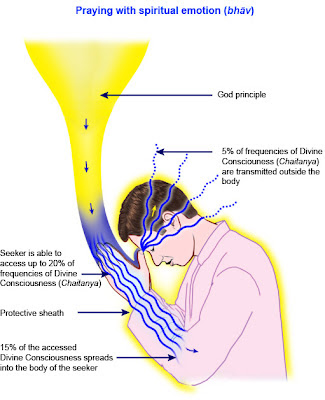
Understanding Prayer: Being Effective

I've been asking myself this question for several months now. Not that I'm inherently skeptical of all things spiritual, but the assertion that faith is blind can easily dissuade even the open minded. I wanted to be sure that something as delicate and mysterious as prayer was equally powerful and effective. After all, we've all heard our share of unanswered prayer stories.

In order to properly evaluate the effectiveness of prayer, I think it is important to first understand the function of prayer. We need to know what it is, what it is not, how it works, and how it does not work.
How it probably doesn't work ⇧
Sun Salute

In every religion, prayer can be recognized by taking some form of posture. Some religions place high importance on posture, even giving "scientific" reason. Posture can be beneficial for quieting our minds in meditation, showing reverence, even exercise, or in some cases, effectiveness. As for Christian prayer, Tim Challies says this:
"Nowhere does the Bible command us that we must set our bodies in one position or another during prayer. Yet it does describe a variety of positions that each have their own significance."
Posture is better understood as a reflection of the heart rather than a means for acquiring God's frequency channel.

The effectiveness of prayer is closely linked to the usefulness of religion in general, and while every religion uses personal betterment as their claim to exclusive truth, or ultimate truth, the amount of testimonies that come from Christians receiving answers to prayer are unprecedented. That said, I think the Scientific Method can help us understand what is happening when we pray, and whether or not it does anything outside of helping some people feel good.

What I'll be exploring in this series is whether the nature of reality permits divine action, and whether prayer has any influence in the matter. In order to do this, I think it is important to settle on some general considerations that will provide a structure, within which particular facts may evidentially count for something. When dealing with the proponents of any religion, we need to first tackle the source of the claim. And since most prayer-related claims come from Christianity, I will focus on the Biblical claims. There are about 512 mentions of the word prayer in the Bible. I found 130 verses on the topic in the New Testament alone.

For many people, the primary function of prayer is to get God to do something. We want to see God heal a sick friend, deliver justice, or simply alleviate suffering in the world. Certainly Christians do believe, and even expect that God will do these kinds of miracles, though any answers that would come from a supernatural agent are naturally unpredictable.
"God surely can and does heal miraculously, but it seems to me that He does not do so as a common occurrence. I hope that does not mean a lack of faith on my part, but I think there is a fine line between faith and presumption."
- David Brickner, Jews for Jesus
There are some within Christendom who relate the frequency of answered prayer to a measure of faith in confidence, but this has more in common with 1st century rabbinical prosperity teaching than anything Jesus said regarding material possessions.

Hebrews 11:1 gives a definition of faith that seems to lay the groundwork for this thinking, but by the end of this chapter we see what is really being said: Faith is not built on receiving what is promised; the goal here is to have faith despite our circumstances. Faith shifts our primary focus away from ourselves toward the benefit of others, and as a result we become the provision of God through prayer.
“When I pray for another person, I am praying for God to open my eyes so that I can see that person as God does, and then enter into the stream of love that God already directs toward that person.”
- Philip Yancey
Over the past 8 months and as I've been writing this, I've been following several friends and various websites petitioning people to pray. I learned about a girl named Lydia's recovery from a coma and brain injury after being hit by a school bus. I took part in a campaign that raised sponsorships for more than 1000 children in Mposa, Malawi. I've prayed with many friends and family going through all kinds of pain over this past year. If there is anything that is evidently consistent to me is the transformed lives surrounding the praying individuals, despite all circumstances. As I begin to pray for others, not only does my faith increase, but there is external evidence of an internal work in them as well. This may not seem substantial from the outset, and may not be what we are looking for, but I'm interested in the natural effects of prayer as much as the supernatural, so I learn to look everywhere.
While not everyone will agree regarding the causes of healing experiences, everyone must agree that they often do not happen. Sickness and injustice remain in the world. In the Gospels, miracles did not replace the kingdom that Jesus announced. Nevertheless, they were signs of hope to promise and invite us to work for a better future.
- Craig S. Keener, Huffington Post: Are Miracles Real?
If the goal of prayer is to regenerate humanity to be active in the care-taking of this world, then ultimately, this is the litmus test for its effectiveness. The greater significance is that prayer is intimately tied to carrying out our purpose as human beings by being charged with the radiance of God's glory. Especially if God desires to communicate to and through us.
"I think if God-talk simply drops out of sophisticated discourse and is just replaced by a wide range of philosophical, spiritual, poetical metaphors that avoid the Abrahamisms of the past, what’s left behind is simply our consciousness of who we are. That is, if we shift into atheism in the name of being in the know, we’re actually shifting into an unknowing ignorance."
- Catherine Keller, Face of the Deep: A Theology of Becoming

Friday, May 11, 2012

Legalizing Sin

* I wrote this in light of the conversations in Christian circles surrounding Obama's recent statement about condoning same-sex marriage.

At the risk of being unpopular among my fellow Christians, and the benefit of not being censored, I'm going to respond to Kevin DeYoung's recent article from The Gospel Coalition, point by point, 1 through 5, using scripture. Why? Because I think he is dead wrong, and his conclusions are seductively unChristian. Christians should not continue to oppose gay marriage. Some of the logical fallacies DeYoung presents are blatantly obvious, so rather than pointing them out, I'm going to stick with using some of Jesus' parables for my arguments against them. My interpretation of these parables, I should note, do not reflect their only application, and if you think I am misguided, by all means let me know with a comment. I intend to use this as a platform for truth, and make no reservation for unaccountability for myself.

Let me start by eliminating some false presuppositions based on my premise that may be unclear: I believe the Bible to be God's infallible scripture, and therefore acknowledge that the Bible explicitly calls Sodomy 'moral sin' (Jude 1:7, Romans 1:24–27, 1 Corinthians 6:9–10, 1 Timothy 1:9-11) according to Christianity.

*Edit: The NIV translates this as "Homosexuality", which may or may not fit with the original understanding of the word; I'm simply neutral on this issue at the moment, and the following argument does not address this nor seek to persuade you either way.

So we begin...

1. Every time the issue of gay marriage has been put to a vote by the people, the people have voted to uphold traditional marriage. Even in California. In fact, the amendment passed in North Carolina on Tuesday by a wider margin (61-39) than a similar measure passed six years ago in Virginia (57-42). The amendment passed in North Carolina, a swing state Obama carried in 2008, by 22 percentage points. We should not think that gay marriage in all the land is a foregone conclusion. To date 30 states have constitutionally defined marriage as between a man and a woman.
 If a Christian has an issue with changing a traditional constitution, we must consider what is at stake if we don't change. As in the parable of the Lost Sheep (Luke 15:3-7), The Good Shepherd willingly leaves his flock to search for the one who is lost. In order for this analogy to function, one requires the freedom to wander. What is at stake here is not even traditional marriage, per se; it is the oppression of freedom. The constitutional definition of marriage is not the definition as God has defined it. Christian marriage is between God and man. What God has joined together cannot be written and signed by our government to make it any more official. The ones who are lost are the ones in need of being validated as humans with rights. If the majority of people vote for something different than the garden of eden (where choice is freedom), and call it God's ideal, I think we're way off.

2. The promotion and legal recognition of homosexual unions is not in the interest of the common good. That may sound benighted, if not bigoted. But we must say it in love: codifying the indistinguishability of gender will not make for the “peace of the city.” It rubs against the grain of the universe, and when you rub against the grain of divine design you’re bound to get splinters. Or worse. The society which says sex is up to your own definition and the family unit is utterly fungible is not a society that serves its children, its women, or its own long term well being.
A society that relies on its government to define things such as sexual orientation is not a solution for gender confusion. This can be likened to putting a lamp under a bowl (Luke 8:16–18) in that government is elevated to uphold the morals of Jesus by creating a new norm, when in fact, this is idolatry. The only way to uphold Christian morals effectively is apart from the state, so that the light of Jesus can be visible. When we rely on government to uphold family values, we can expect things like gender distinguishability to be taken from us. Besides all this, it is benighted and bigoted to presuppose that homosexual parents desire to control the sexual orientation of their children.

3. Marriage is not simply the term we use to describe those relationships most precious to us. The word means something and has meant something throughout history. Marriage is more than a union of hearts and minds. It involves a union of bodies–and not bodies in any old way we please, as if giving your cousin a wet willy in the ear makes you married. Marriage, to quote one set of scholars, is a” comprehensive union of two sexually complementary persons who seal (consummate or complete) their relationship by the generative act—by the kind of activity that is by its nature fulfilled by the conception of a child. So marriage itself is oriented to and fulfilled by the bearing, rearing, and education of children.” This conjugal view of marriage states in complex language what would have been a truism until a couple generations ago. Marriage is what children (can) come from. Where that element is not present (at the level of sheer design and function, even if not always in fulfillment), marriage is not a reality. We should not concede that “gay marriage” is really marriage. What’s more, as Christians we understand that the great mystery of marriage can never be captured between a relationship of Christ and Christ or church and church.
The church lost the right to define legal marriage when we accepted tax benefits for married couples. Personally, I don't consider a marriage to be Christian unless the people in it are Christians. It's a different set of vows altogether. We can easily fall victim to judging others, to which I'm quickly reminded that while I was dead in sin, Christ died so I may live. The parable of the Two Debtors (Luke 7:36-47) shows us how more debt requires more grace, and pointing out when someone else doesn't measure up to my morals shows how little I could possibly love anyone.

4. Allowing for the legalization of gay marriage further normalizes what was until very recently, and still should be, considered deviant behavior. While it’s true that politics is downstream from culture, it’s also true that law is one of the tributaries contributing to culture. In our age of hyper-tolerance we try to avoid stigmas, but stigmas can be an expression of common grace. Who knows how many stupid sinful things I’ve been kept from doing because I knew my peers and my community would deem it shameful. Our cultural elites may never consider homosexuality shameful, but amendments that define marriage as one man and one woman serve a noble end by defining what is as what ought to be. We do not help each other in the fight for holiness when we allow for righteousness to look increasingly strange and sin to look increasingly normal.
Imposing Christian morals on society is no way to legislate a standard for living, let alone define deviant behaviour. Christianity, like [most] religions, is an opt-in relationship, and to say anything about someone who hasn't made that choice (and therefore doesn't accept our definition of sin), is simply inappropriate—EVEN IF our standards are too high for ourselves. The law was written on the hearts of man for the exclusive right of God to convict. Heterosexual marriage does not define nobility any more than being right handed. What defines nobility is the quality of your marriage. Righteousness will not look strange so long as we appear to be Wheat Among Weeds (Matthew 13:24-30). Since you and I as Christ-followers are mere servants, leave the harvesting to the harvesters.

5. We are naive if we think a laissez faire compromise would be enjoyed by all if only the conservative Christians would stop being so dogmatic. The next step after giving up the marriage fight is not a happy millennium of everyone everywhere doing marriage in his own way. The step after surrender is conquest. I’m not suggesting heterosexuals would no longer be able to get married. What I am suggesting is that the cultural pressure will not stop with allowing for some “marriages” to be homosexual. It will keep mounting until all accept and finally celebrate that homosexuality is one of Diversity’s great gifts. The goal is not for different expressions of marriage, but for the elimination of definitions altogether. Capitulating on gay marriage may feel like giving up an inch in bad law to gain a mile in good will. But the reality will be far different. For as in all of the devil’s bargains, the good will doesn’t last nearly so long as the law.
Besides being a slippery-slope fallacy in logic, this is also classic fear-mongering against an alleged agenda which should really have no bearing on how we should respond to them as people. The parable of the Good Samaritan (Luke 10:30–37) shows us how to love someone with an affliction, counter to religious priorities or consequences. Upholding the law as a levite or priest ultimately has greater implications for choosing to not get one's hands dirty. Surrendering an agenda of building a Christianized empire for the sake of someone's human rights is a worthwhile investment that will not go unnoticed. Not to mention, that's what Jesus would do.


Obviously I may have raised some further questions, for example, Should the church marry gay Christians? I think this comes down to personal conviction, as performing the wedding would ultimately recognize the marriage as before God, at least in appearance. Although, it sounds rather odd to want that—God's blessing to redefine a covenant that perfects the union of man with woman.